
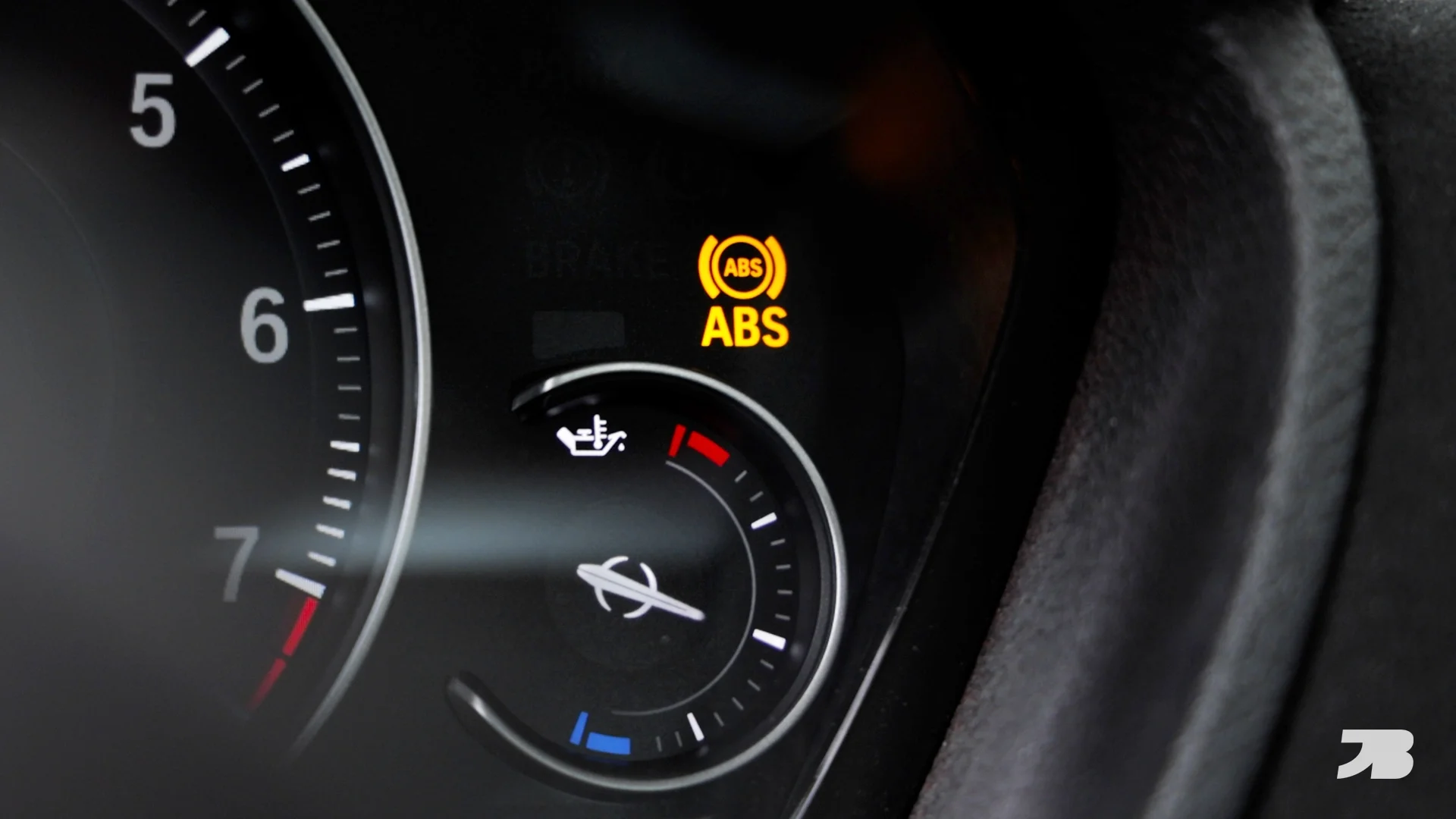
BMW ABS WARNING LIGHT ON? Here’s how to fix it
Recently, my BMW 340i was experiencing stability control issues. It started as an intermittent ABS warning light on the dash, which became a permanent ABS light over the course of a couple weeks. Luckily it was a simple fix, and I was back on the road for under $100.
Common Symptoms:
ABS warning light on cluster
Reduced engine power (feels like the transmission is slipping)
Speedometer not working
Cruise control not working
Hill assist not working
iDrive message “Drivetrain Malfunction: Drive moderately. Maximum drivetrain output not available.”
iDrive message “Chassis Stabilization: Drive Moderately. Avoid hard braking.”
Repair Cost: Dealership vs. DIY
Dealership Quote: Forum members and owners frequently report quotes between $250 and $450 to replace an ABS sensor.
DIY Potential: If you have jack stands and basic hand tools, you can perform this repair yourself in about an hour. I bought an OE wheel speed sensor for $86.
Pro Tip: Wheel speed sensors are critical for your car’s stability control system and safety. ABS issues should be addressed immediately.
Parts
Front wheel speed sensor: ATE 34526884422
Rear wheel speed sensor: ATE 34526884421 (shown here)
Front wheel speed sensor (w/ active cruise): ATE 34526869320
Rear wheel speed sensor (w/ active cruise): ATE 34526869322
Note: ABS sensors are front and rear specific. If your car has Active Cruise Control (ACC), those sensors are different part numbers. Use a diagnostic tool to determine which sensor needs replacing.
I went with ATE, which was the OE supplier of these sensors. And in case you’re not familiar, “OE”, or “Original Equipment” is the exact part that would have been installed by the factory when the car was assembled.
Diagnostics
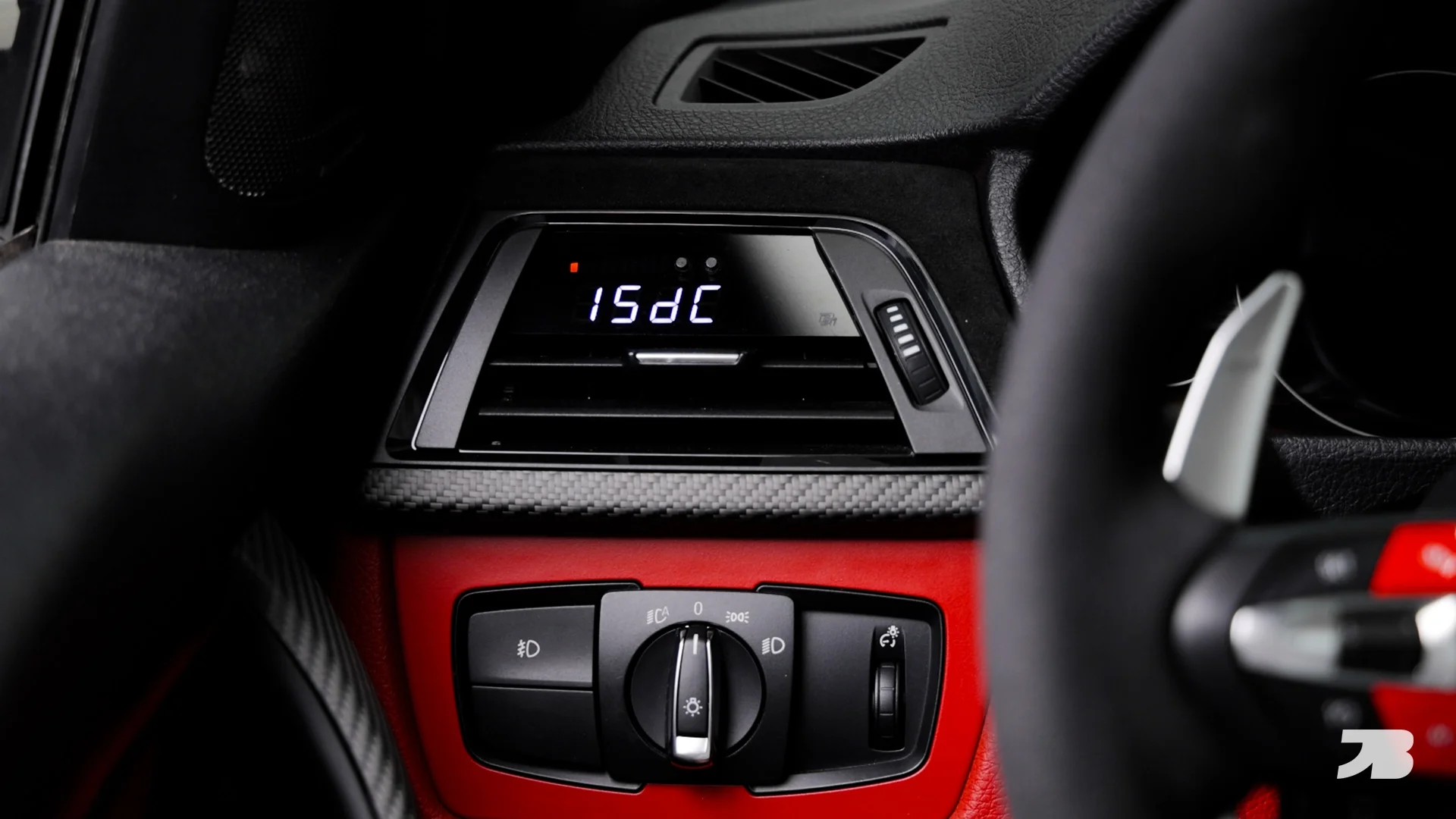
My car started acting up away from home, but was able to check the code with my P3 Vent Gauge and it read “P15DC,” a generic BMW fault code for the rear left wheel speed sensor (ABS sensor).
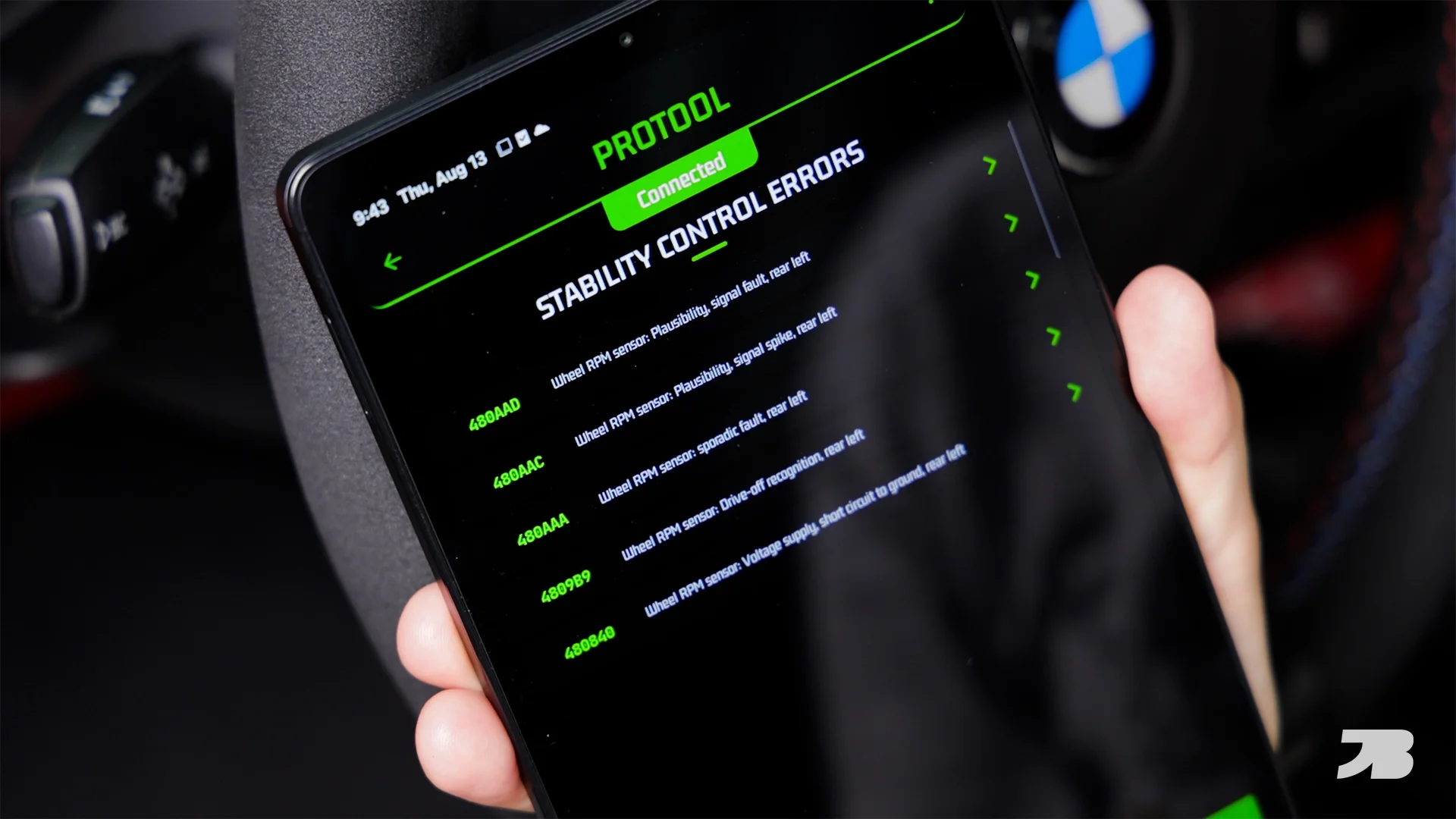
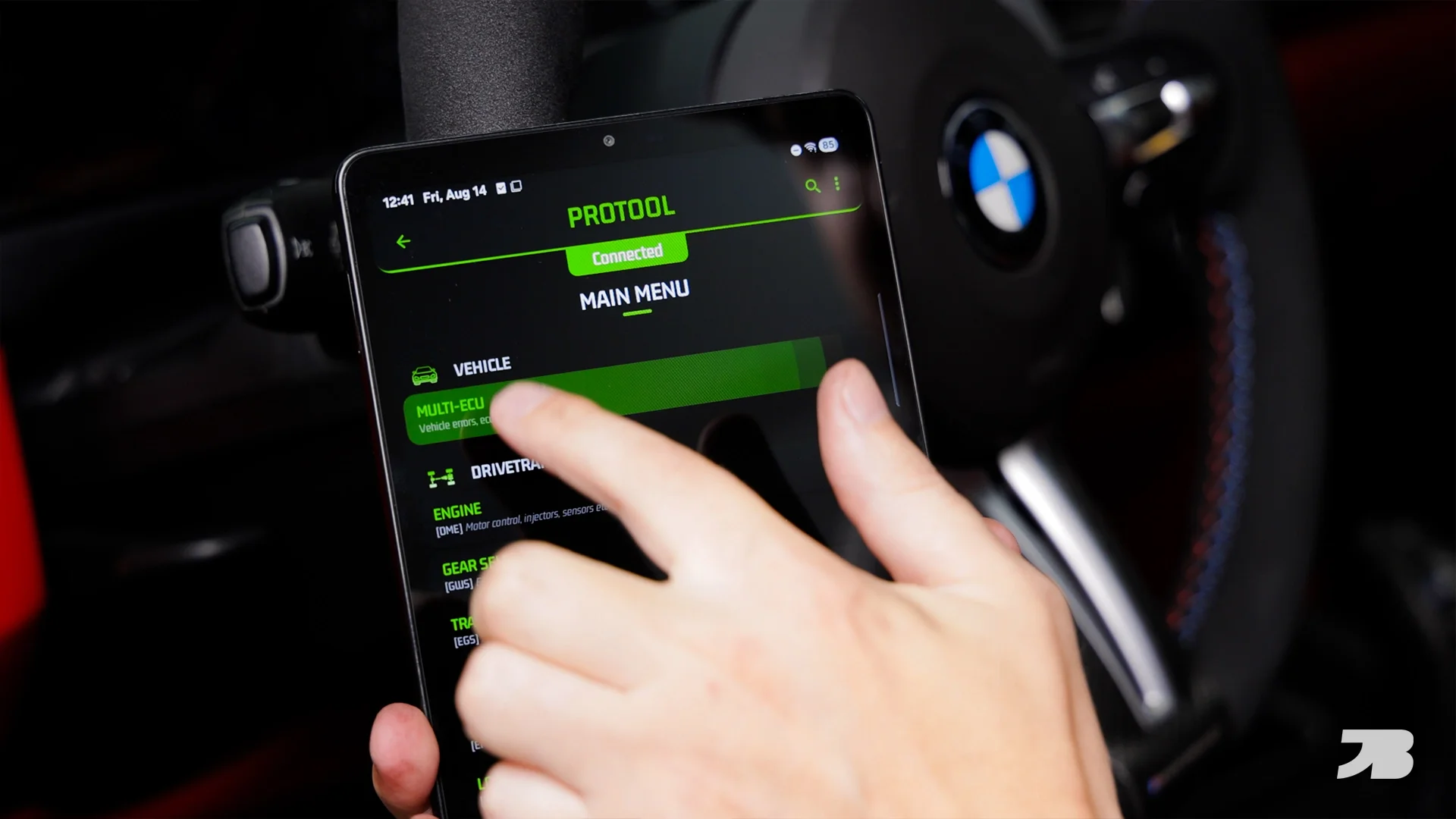
When I got home, I used ProTool to dig deeper. There were a total of 12 codes across 4 modules, which is why having a BMW-specific scan tool is helpful if you need more nuanced insights.
These were the error codes I had:
480AAD Wheel RPM Sensor: Plausibility, signal fault, rear left
480AAC Wheel RPM Sensor: Plausibility, signal spike, rear left
480AAA Wheel RPM Sensor: Sporadic fault, rear left
4809B9 Wheel RPM Sensor: Drive-off recognition, rear left
480840 Wheel RPM Sensor: Voltage Supply, circuit to ground, rear left
D017A3 Signal (Wheel signal edge number, 64.1.2) invalid, transmitter DSC
D017C5 Signal (Wheel RPM, 46.0.1) invalid, transmitter DSC
C017C6 Signal (Current wheel RPM, 46.0.1) undefined, transmitter DSC
1B0A21 Information rough road detection, wheel RPM sensors, signal: Missing
1B0A64 Information on driving speed, wheel RPM sensor rear left, signal: Not plausible
420611 DSC interface (wheel RPM): unapproved wheel RPM deviation
CF2F02 Signal (current RPM rear left/ front left/ rear right, front right, 0x254) invalid, transmitter DSC
Even though ABS issues can occur for a multitude of reasons, it was plainly obvious based on the codes that my rear left sensor had failed. You can always test them by swapping them to the opposite side of the car and seeing if the codes follow. But I was confident in the diagnosis and ordered a new sensor.
BMW 3 Series & 4 Series Wheel Speed/ ABS Sensor Replacement Guide
Step 1: Use a diagnostic tool to find which sensor is faulty. I use ProTool, but others like Carly or BimmerLink will work as well. I use a Kies OBDII Wifi Adapter to connect to the car.
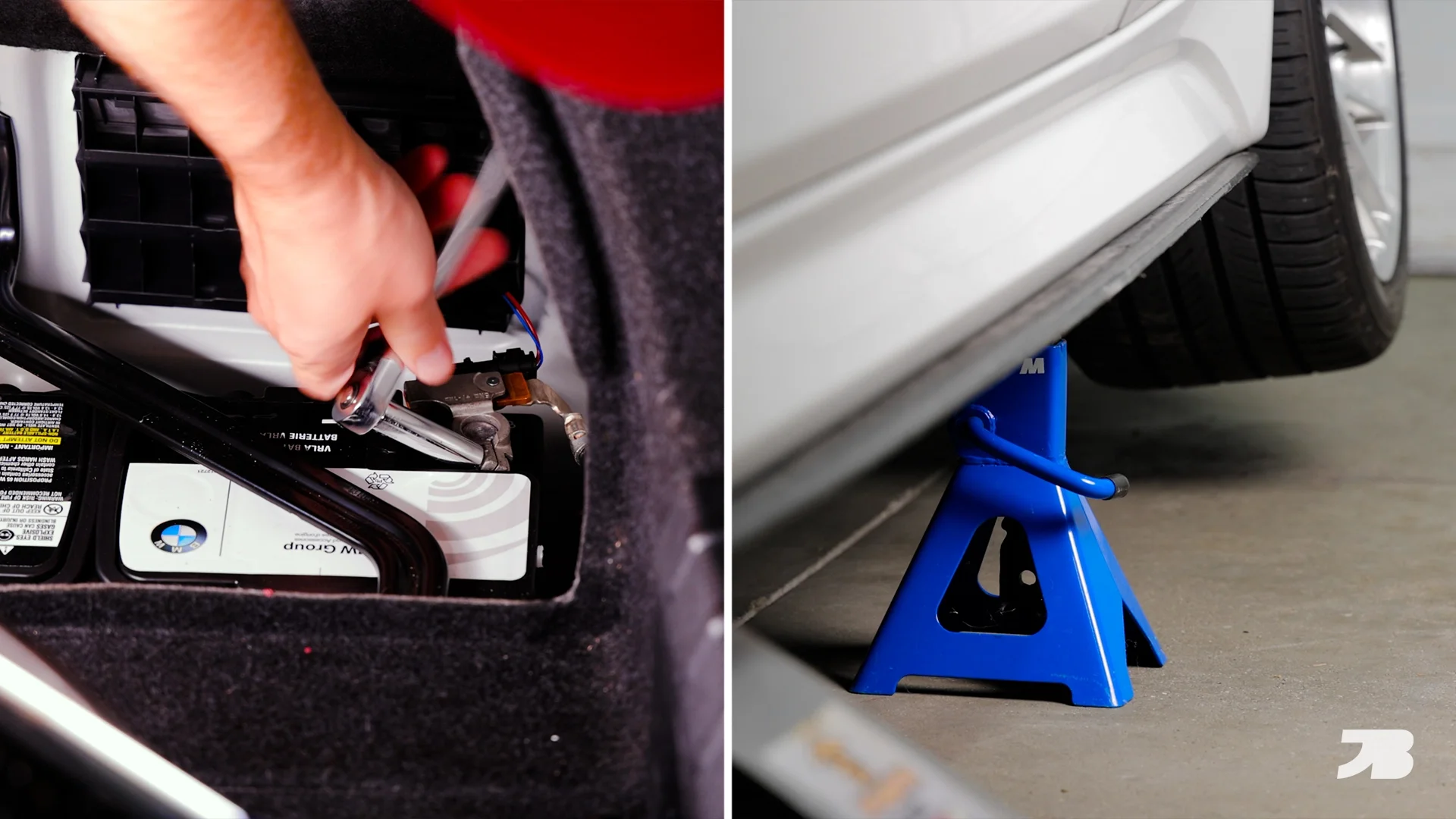
Step 2: Disconnect battery, jack up car and remove wheel.
Step 3: Remove a plastic 10mm nut and pull back the fabric fender liner, then unplug the ABS sensor from the car.
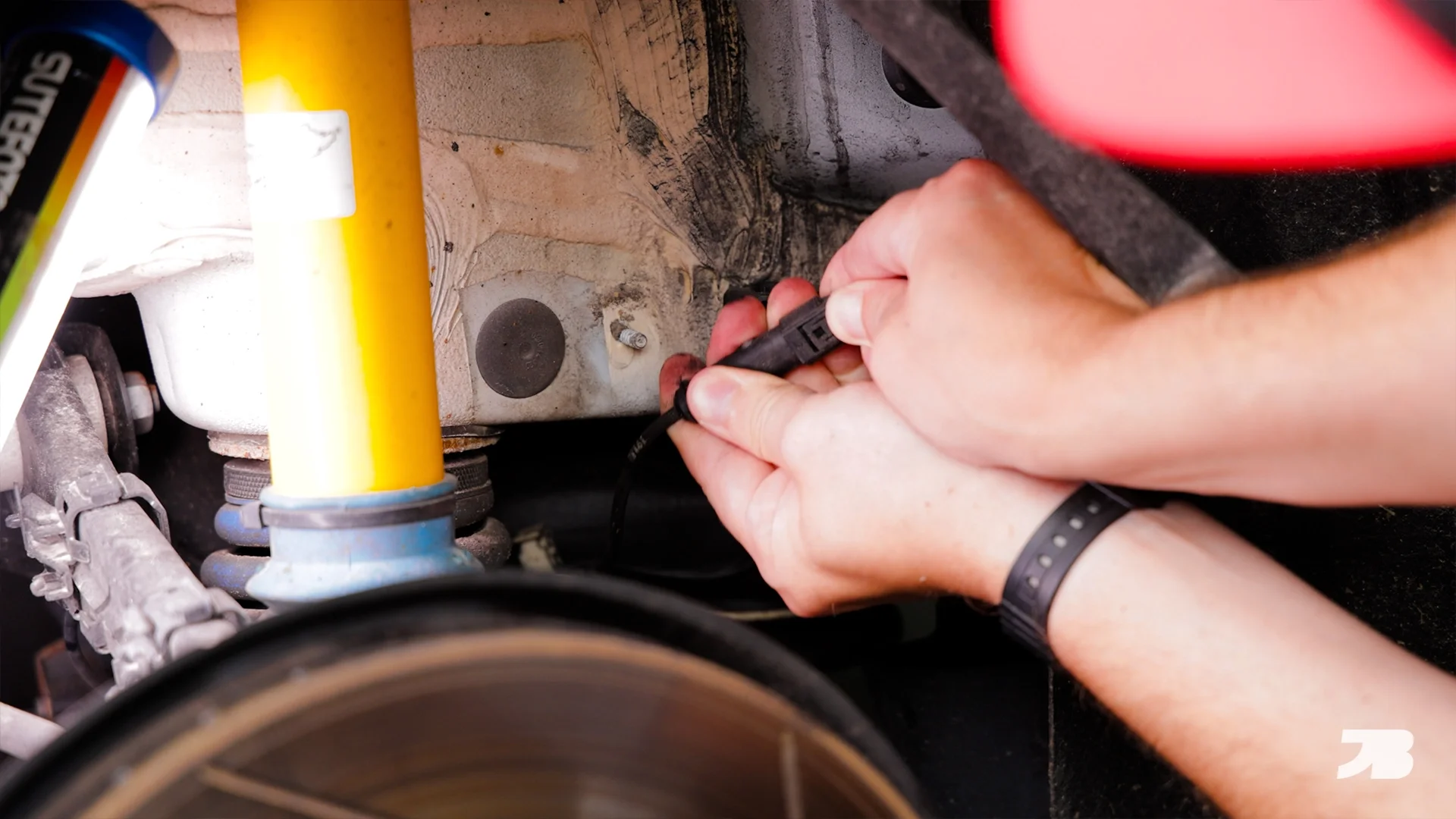
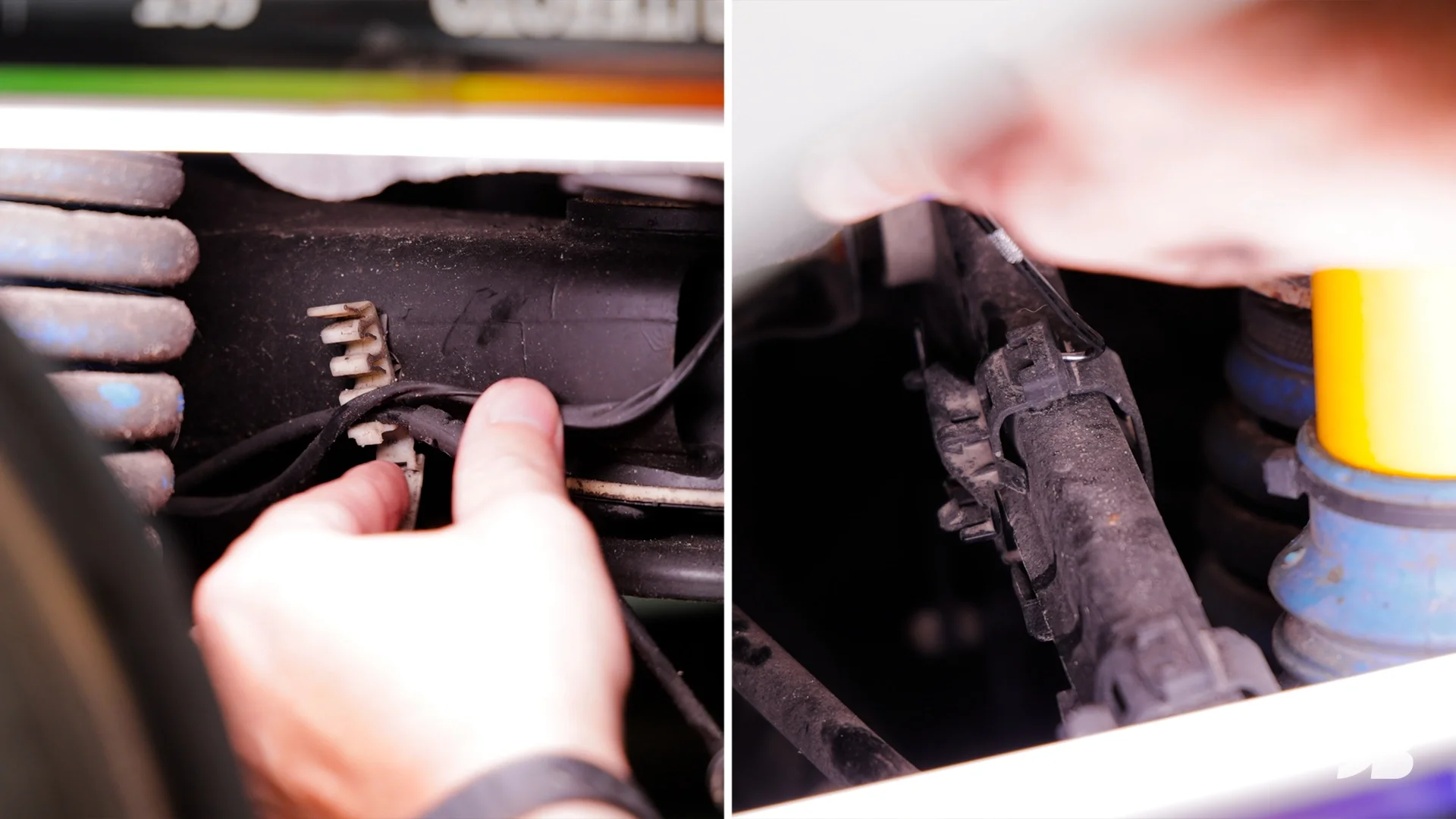
Step 4: Unclip the ABS sensor from the subframe and trailing arm.
Step 5: Remove the T27 bolt holding the sensor in.
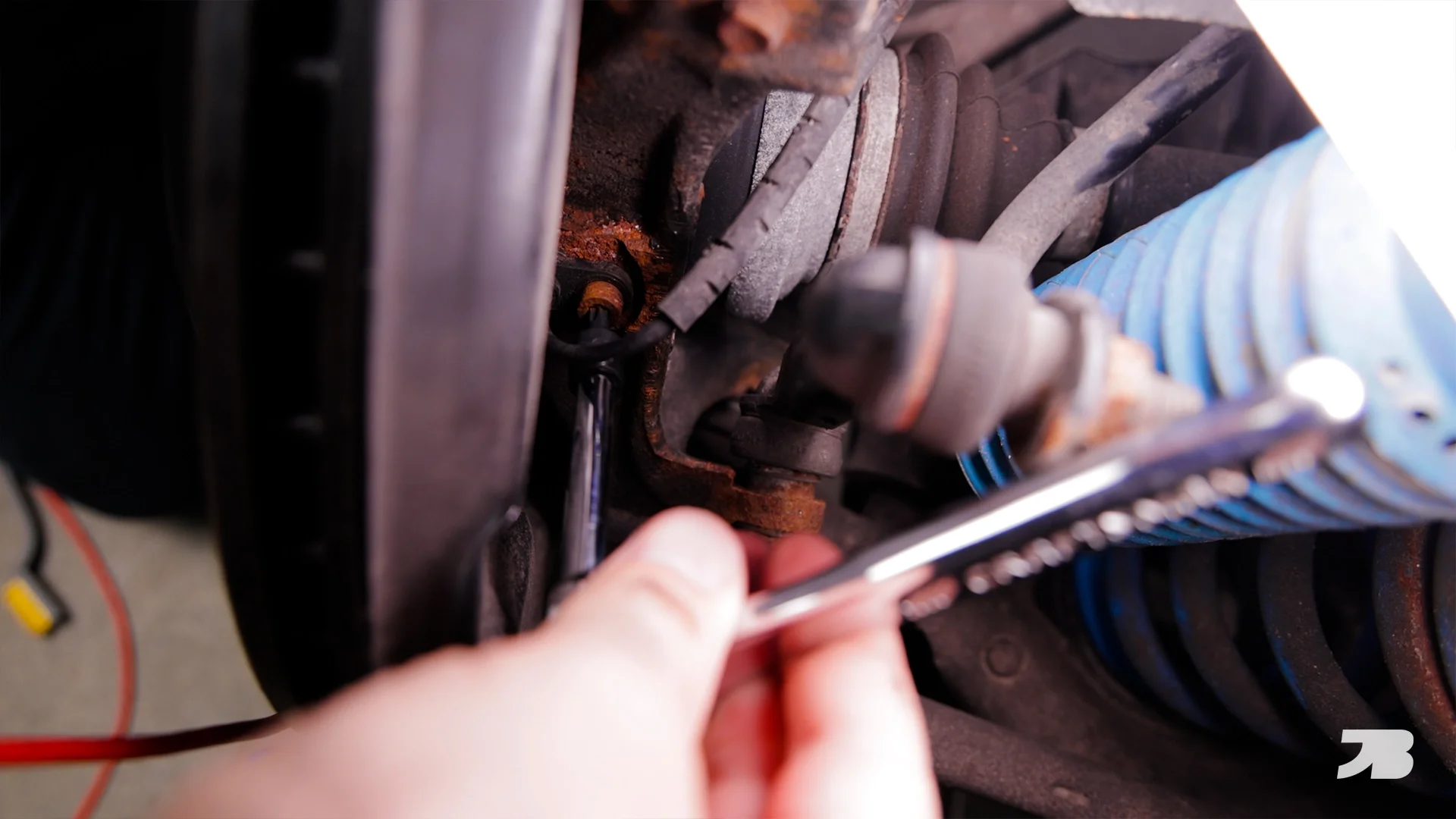
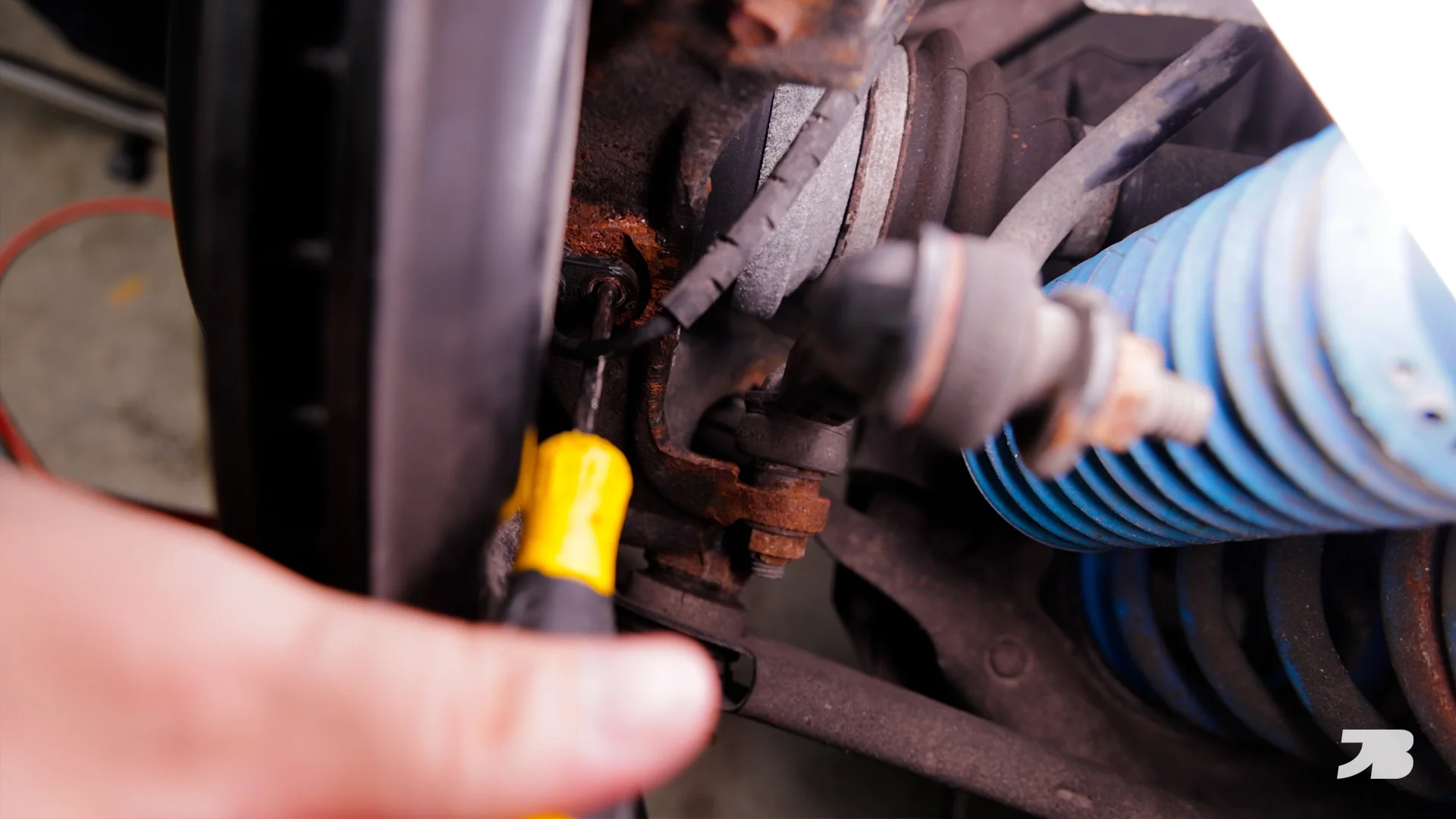
These sensors are notorious for getting seized in the knuckle. I used a small screwdriver in the hole to gently rock it out before prying it the rest of the way. .
Step 6: Install new ABS sensor into the plastic clip from the trailing arm.
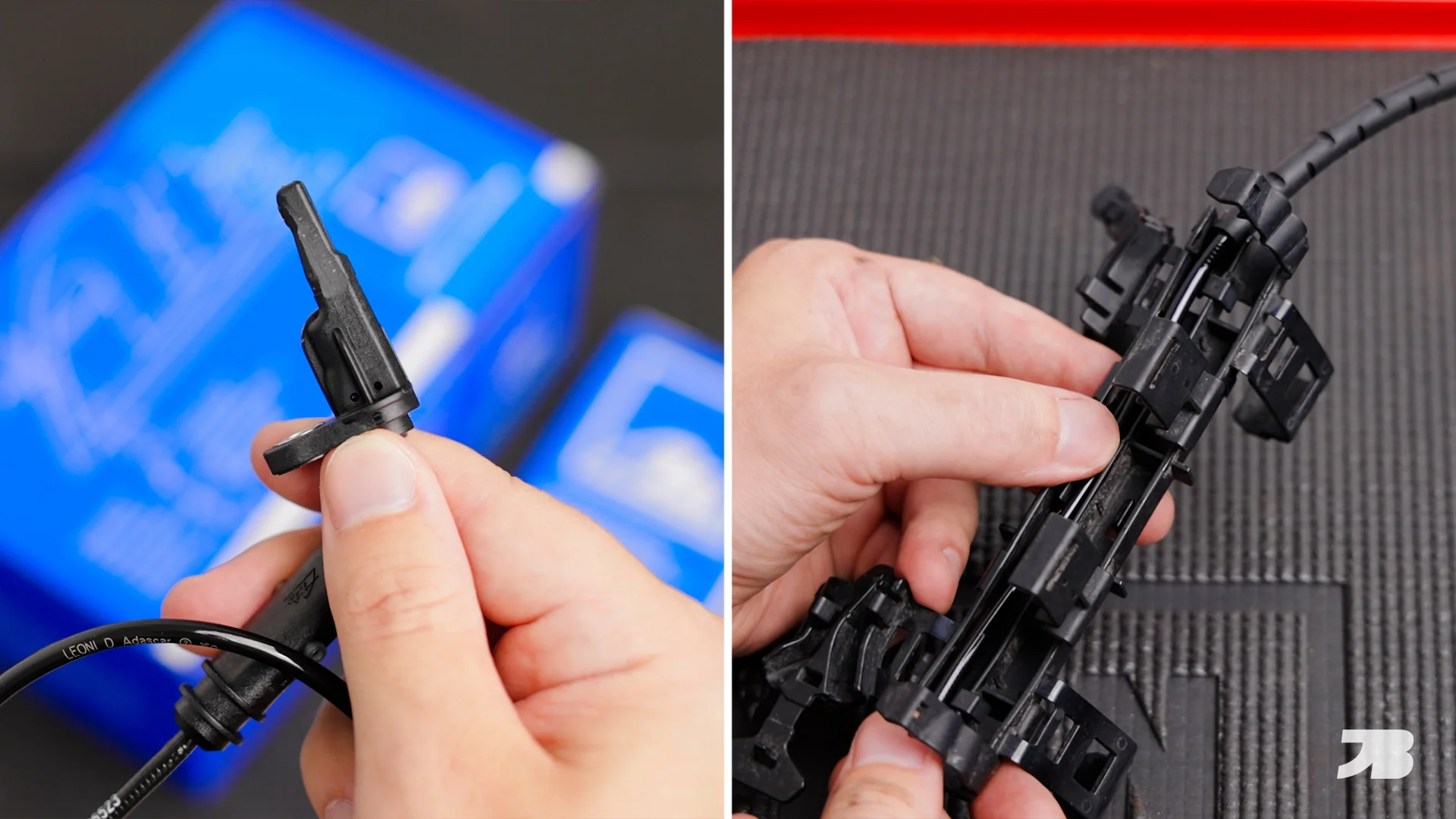
Step 7: Lubricate the hole with Plastilube, then install the new ABS sensor. You can tighten the T27 bolt by hand, just be sure that the sensor is flush inside the knuckle.
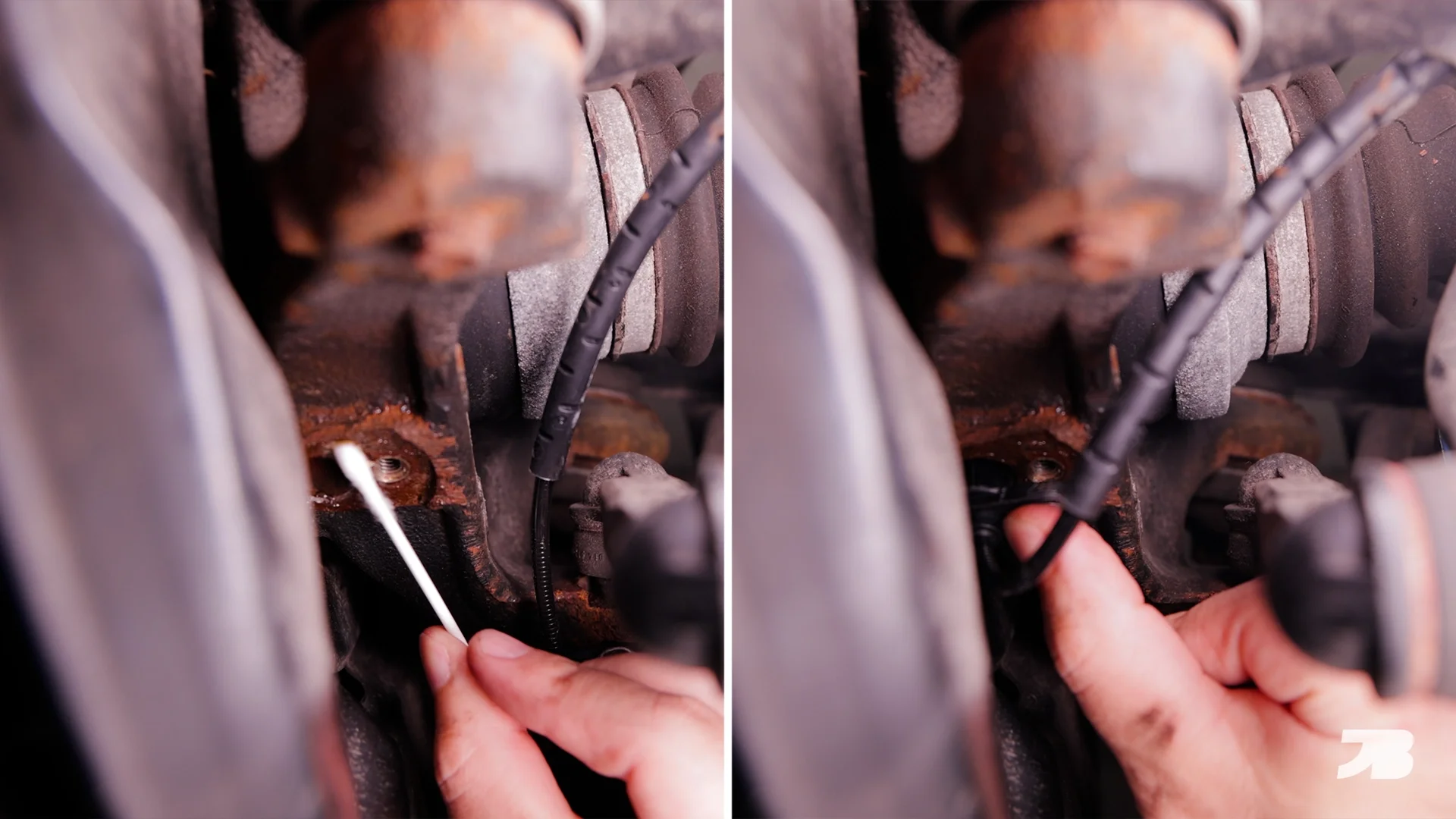
Step 8: Clip the ABS sensor back onto the trailing arm and subframe, plug it into the car, and reinstall the 10mm plastic nut on the fender liner. Reinstall the wheel and torque the wheel bolts in a star pattern to 140 N·m (103 lb-ft). Reconnect the battery and then use your diagnostic tool to clear the error codes.
How Does BMW Dynamic Stability Control Work?
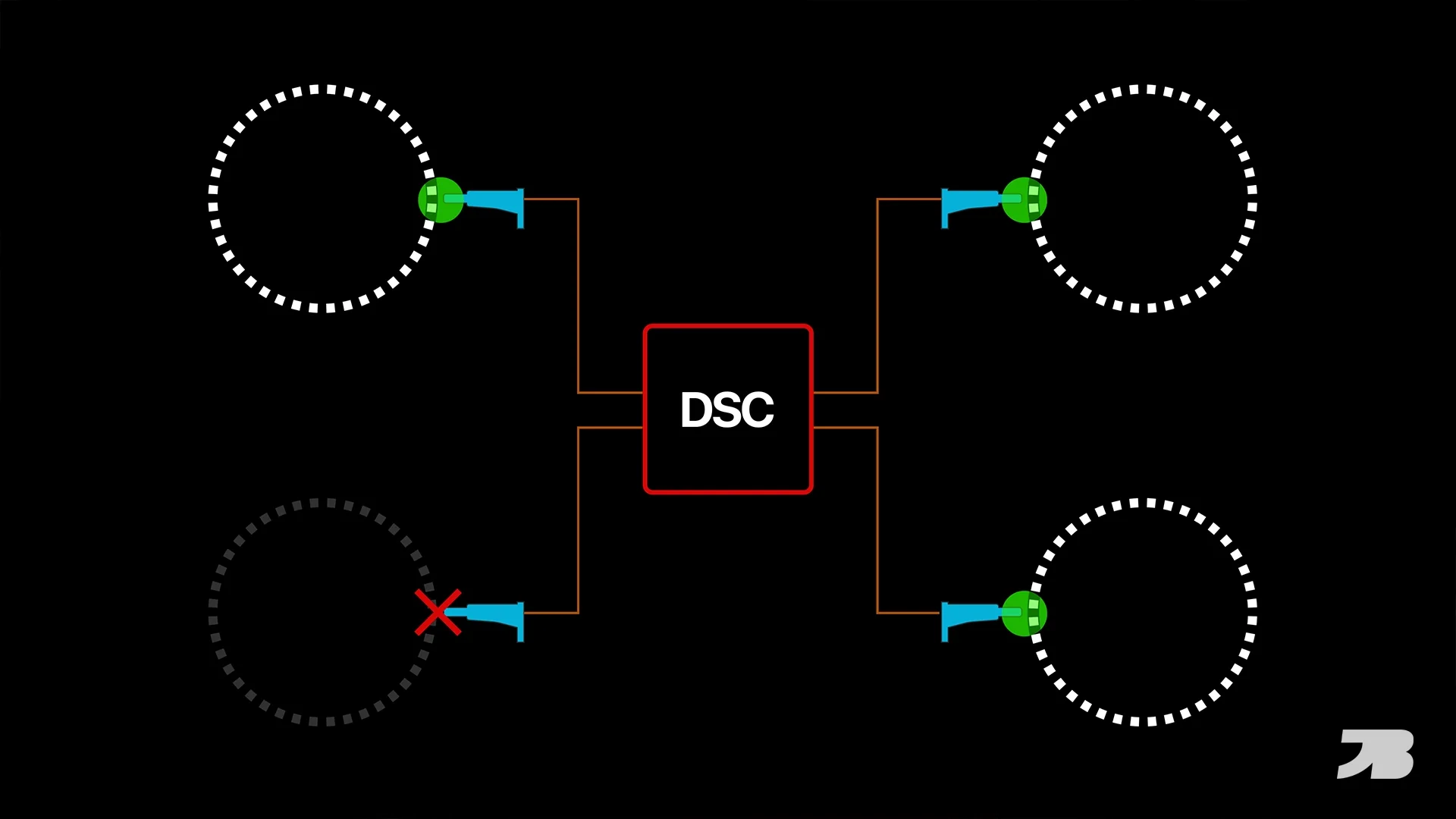
Your BMW has an ABS sensor in the hub of all four wheels. The wheel bearing seal has a magnetic increment ring applied to the outside. As the wheel spins, the sensor counts the magnetic pulsations (known as “Hall Effect”).
Under normal driving conditions, all four wheels are spinning at approximately the same speed, but if the DSC module detects that one or more wheels is skidding or spinning faster than the rest, it can cut the throttle and apply the anti-lock brakes to individual wheels until the car is back under control.
The problem is, in order for this system to work at all, all four ABS sensors need to be in working condition. If even one sensor fails, the car will go into a safe-mode where you have limited engine power and limited functionality of stability systems. That’s why it’s important to address ABS issues quickly!
ABS Gremlins
In my case, I got lucky in that it was just a bad sensor, and replacing it resolved the issue. Unfortunately modern ABS systems are complicated and rely on a multiple parts working in tandem, making them tricky to diagnose. If you replaced the ABS sensor and are still having issues, here are a few things you can try.
Connect your car to a trickle charger for a day or two. Low battery voltage or a dying battery can cause sensors to malfunction. If your car battery is over 5 years old, have it tested.
Make sure your brake fluid reservoir is topped off and there is no air in the brake lines.
If any component of the wheel hub has been serviced recently (brake rotors, wheel bearings, etc.) double check that everything is torqued correctly.
Be sure that your tires are properly balanced, as road vibration can cause the sensors to read incorrectly.
As a last resort (as they are expensive/ difficult to replace), you can check the DSC module, ABS module and the wheel bearing.
BMW ABS/ wheel speed sensor replacement video
*This blog contains affiliate links. If you click my custom link to purchase a product, I earn a small commission at no extra cost to you.